Verizon Design Sprint
Redesigning customer service escalation into a transparent, ownership-driven experience.
Overview
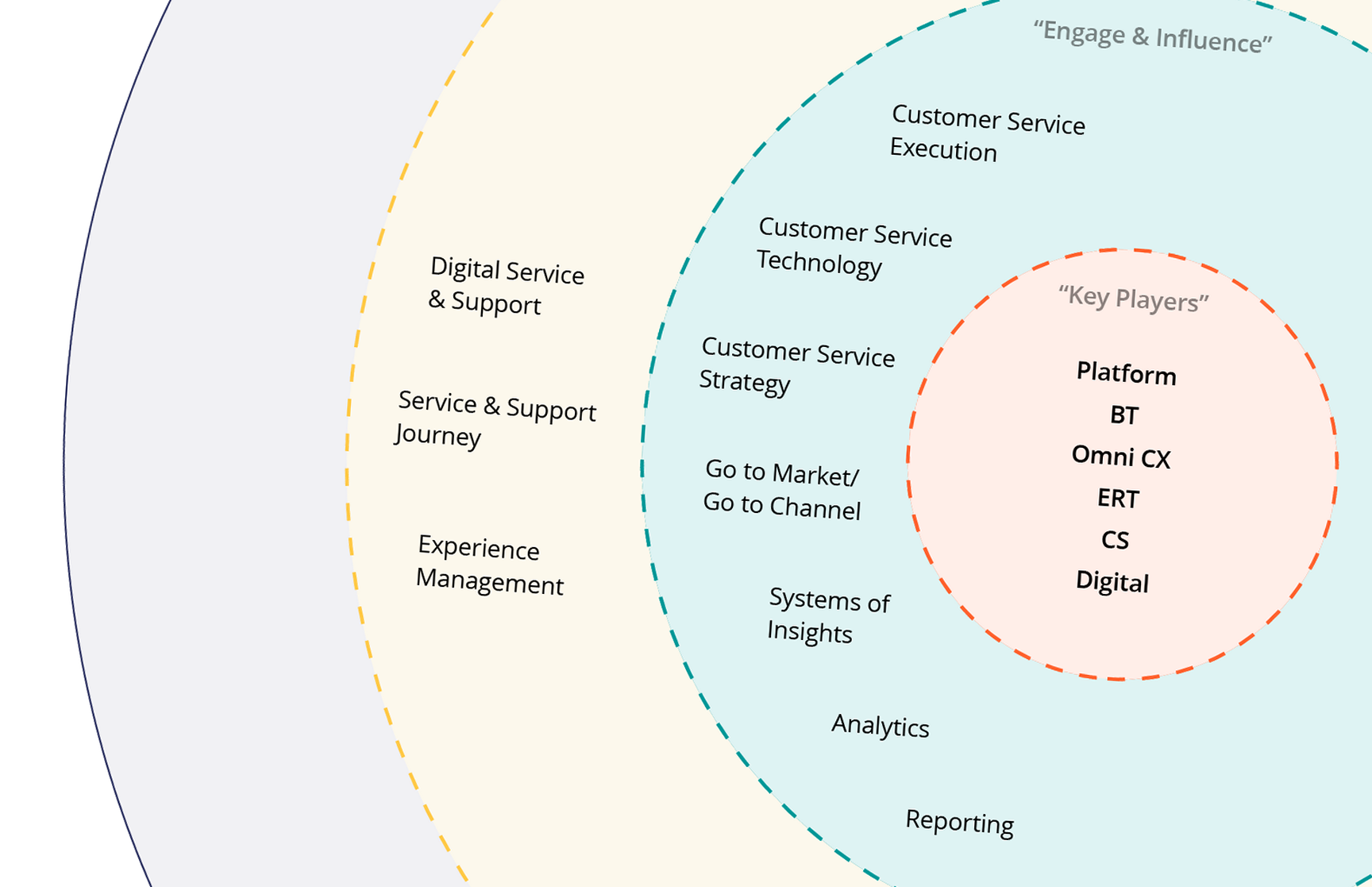
I co-led a design sprint with Verizon focused on reducing breakpoints in their customer service escalation process, especially for technical issues passed between Verizon Retail and Customer Care teams. The focus was on first-call resolution and eliminating the frustration customers faced from being bounced between channels. The result was a new "Managed Resolutions" workflow built on transparency, proactive follow-up, and clear ownership of customer issues, supported by a prototyped, user-tested design and a defined path to MVP.
Challenge
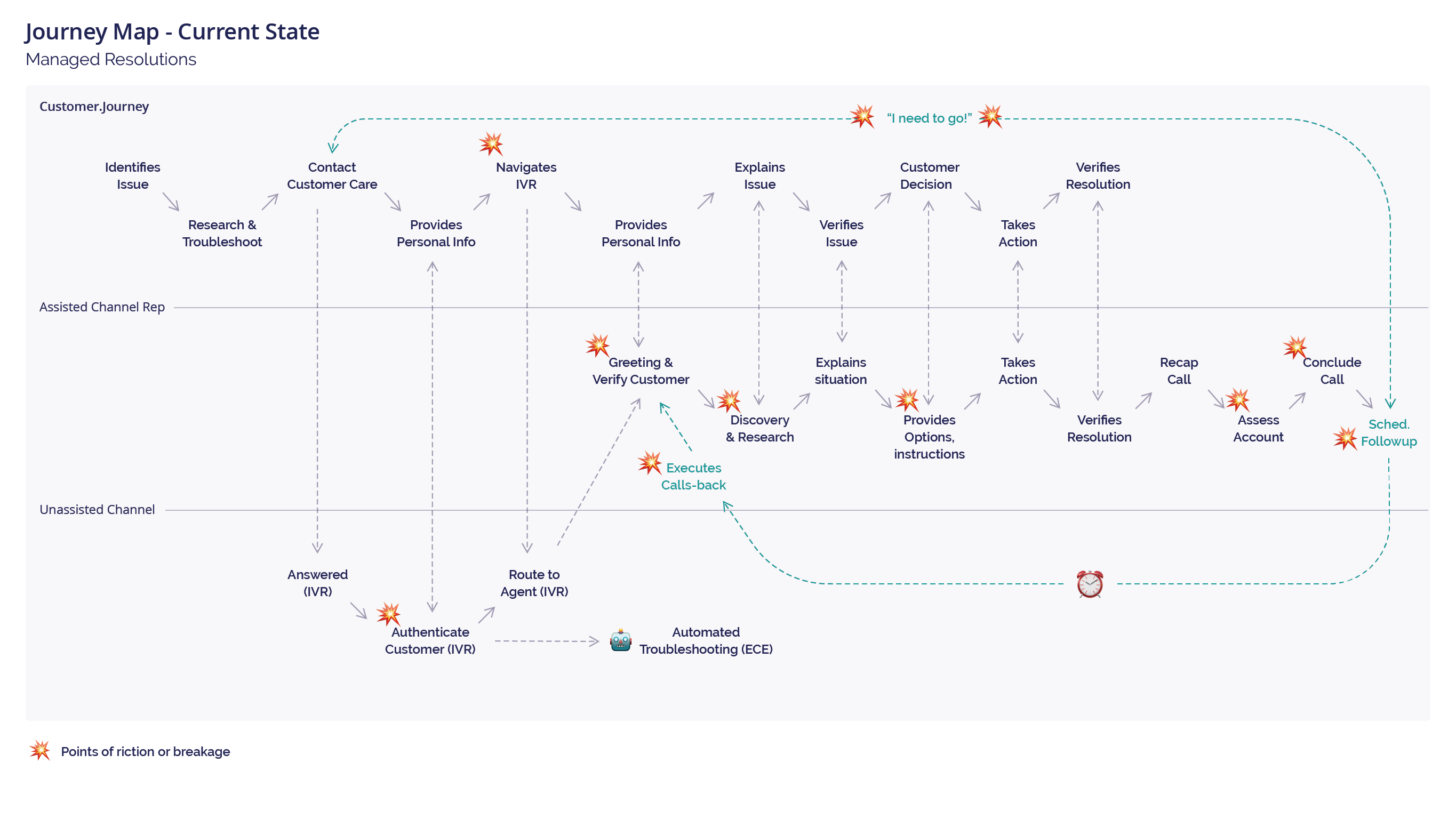
Verizon's customer resolution process for device and service issues often spanned multiple channels, retail, technical support, and digital, and customers had little visibility or accountability as they moved between them. That created frustration, long resolution times, and declining satisfaction, along with real operational overhead from repeat calls. Verizon needed a simpler, more transparent approach that could push first-call resolution above 90% while eliminating redundant effort for customers and staff alike.
Process & Solution
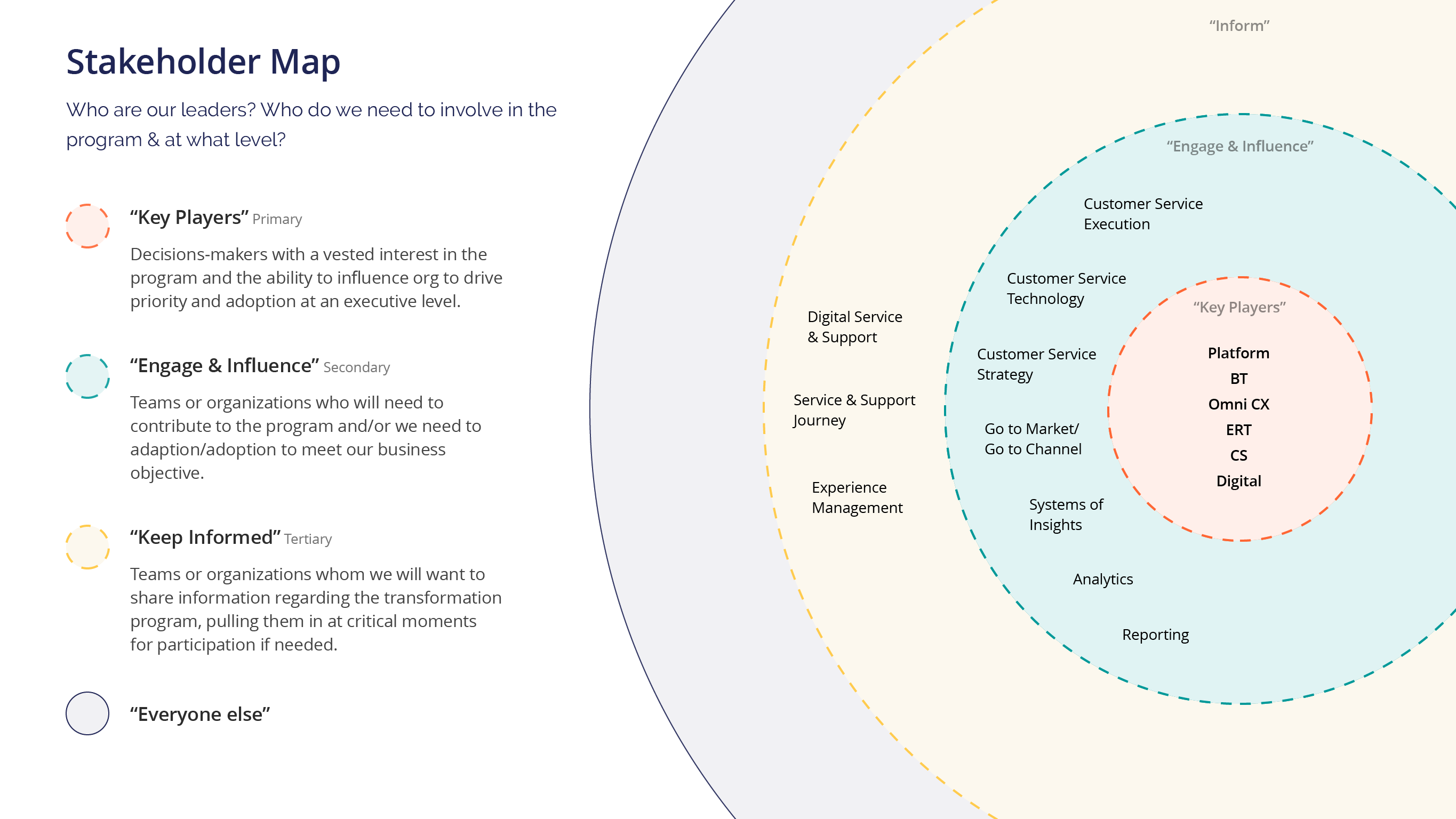
The sprint. Using Pega Catalyst and design thinking methodology, I co-led a multi-week sprint that brought together Customer Service, Digital, Experience Management, and frontline teams. We mapped the end-to-end escalation journey and identified current-state pain points, reframed the core problems into "How Might We" prompts, and moved into storyboarding and future-state concept design, validating each round with real Verizon customers and care agents.
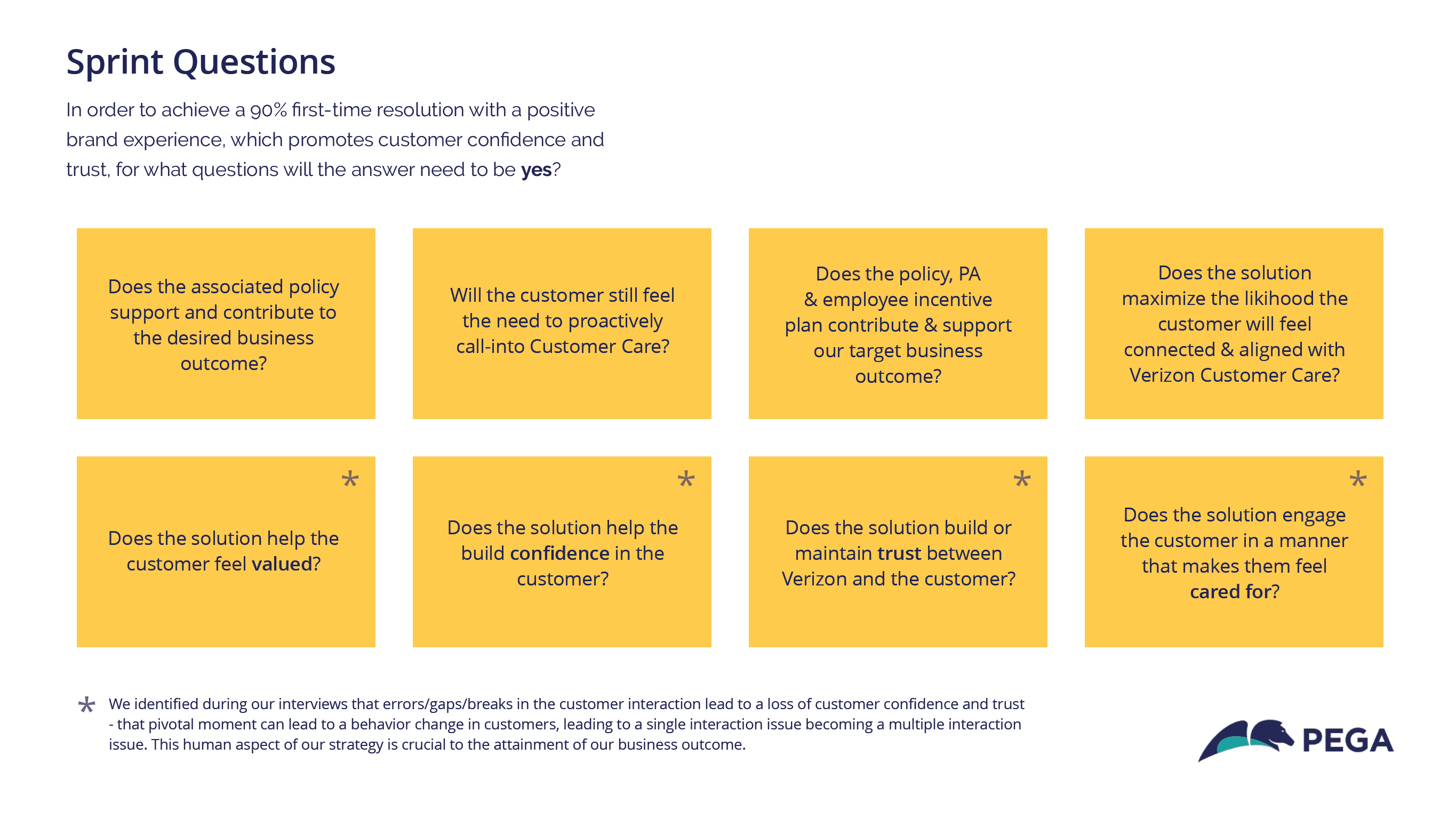
Human confidence over internal complexity. Customer confidence and emotional trust emerged as the top priority early on, so the goal shifted from fixing routing logic to designing transparency, ownership, and closure into the experience itself. We reframed the approach:
- From "solving the issue" to ensuring the customer feels it was resolved
- From "efficient call flow" to clear, empathetic transitions between people
The workflow. That thinking shaped the Managed Resolutions model: a device issue starts in-store, where a retail rep captures the details and schedules a callback; tech support receives full context before making that call and troubleshooting; the issue gets resolved and recapped both verbally and digitally; and the customer receives a follow-up SMS with a summary and a self-reporting option. The final design introduced a dedicated case owner, proactive communication checkpoints, and digital status tracking, so both agents and customers always knew where things stood.
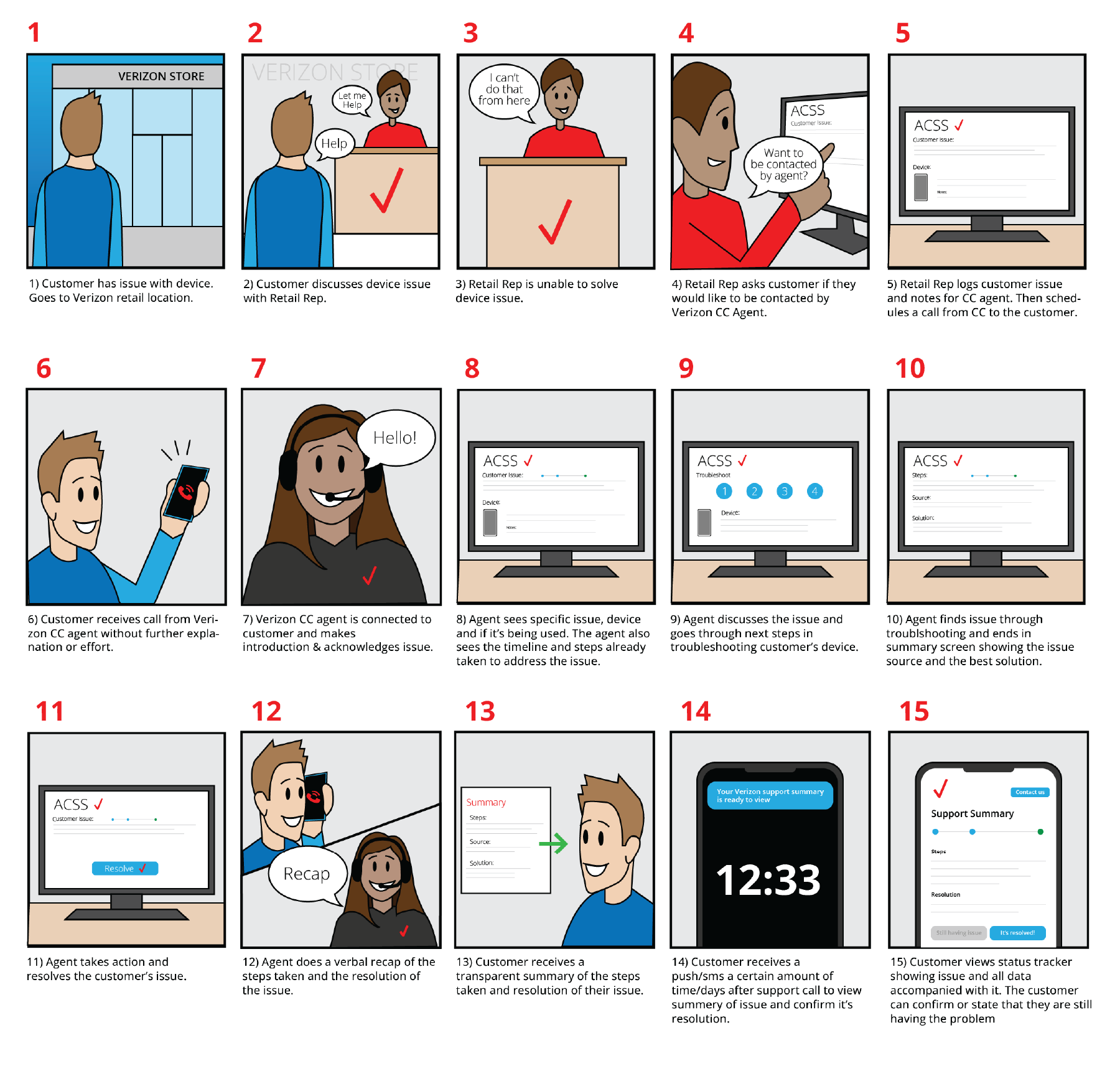
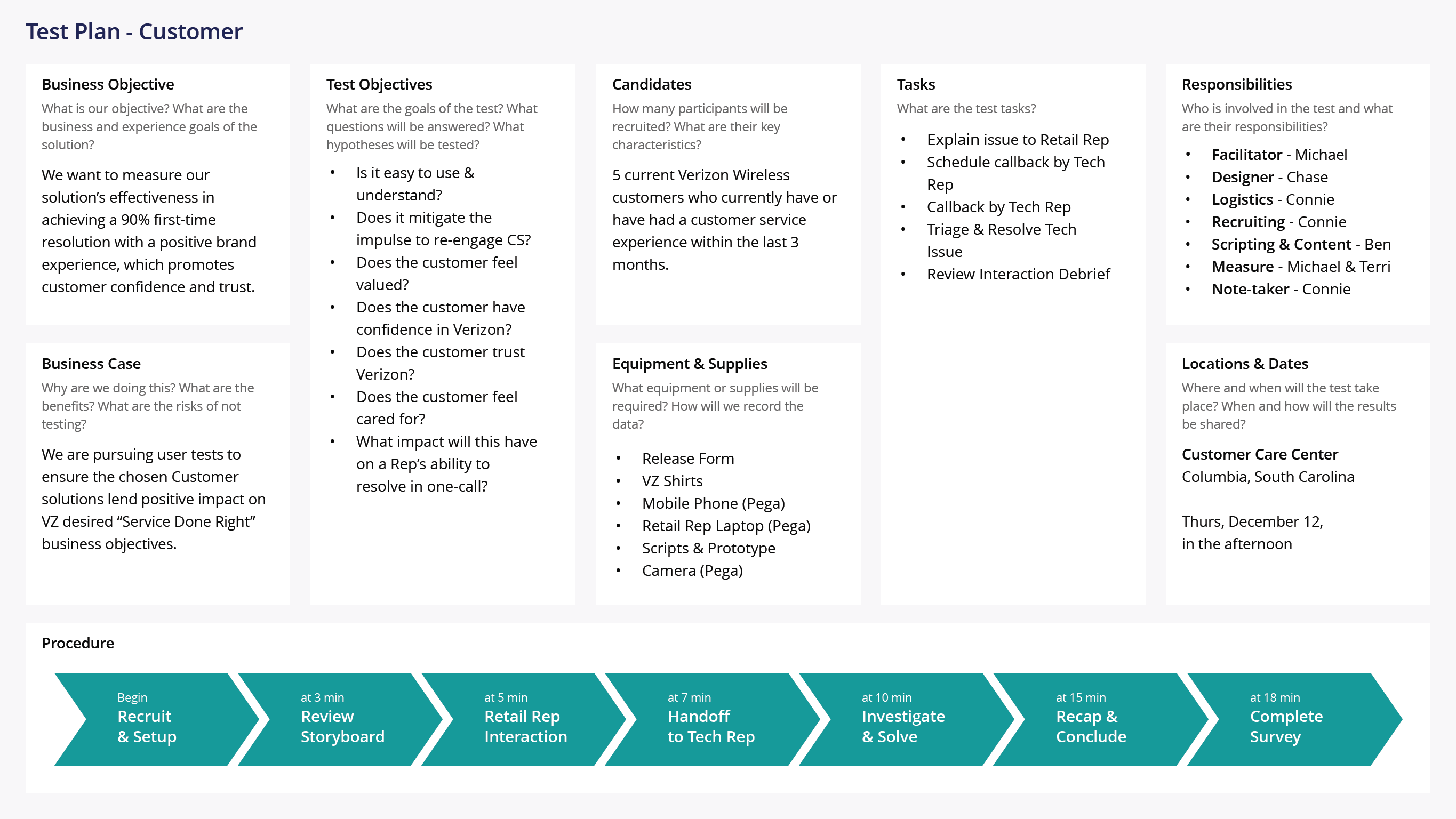
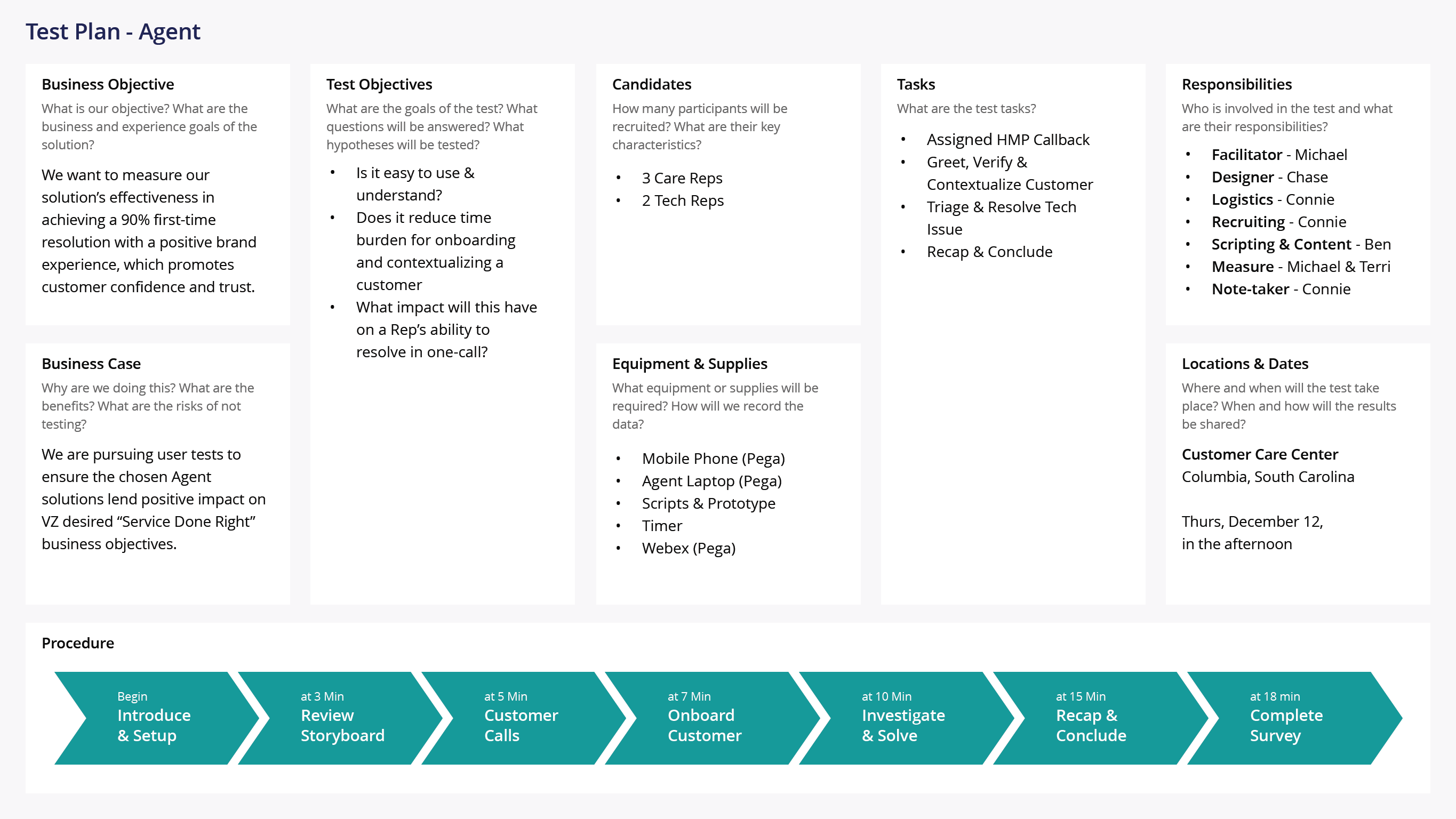
Validation and delivery. We ran structured user testing at a Verizon Customer Care Center in Columbia, South Carolina, with five customers who'd had recent service issues alongside three care reps and two tech agents, testing whether the solution felt intuitive, reduced the need to re-engage support, and left customers feeling informed and confident. From there, the work moved from prototype into planning for MLP and Sprint Zero, split into two tracks: CERS (Customer Escalation Resolution System) to improve platform capabilities, and Managed Resolutions to operationalize the new workflow, backed by journey maps, persona insights, a prioritized backlog, and a delivery strategy aligned with both Pega and Verizon stakeholders.
Impact
- Transformed a fragmented, multi-channel resolution process into a single, streamlined digital workflow
- Reduced repeat calls by closing the gaps in channel transitions and giving agents fuller context
- Increased customers' sense of transparency through proactive issue summaries and digital status tracking
- Strengthened customer trust and satisfaction through an emotionally intelligent, ownership-driven design approach
- Produced validated prototypes and a prioritized delivery roadmap that carried the work from concept into active planning with Pega and Verizon stakeholders
Deliverables
- Future-state journey maps, persona insights, and redesigned escalation workflows
- Prototypes demonstrating new resolution tracking and communication methods
- Workshop artifacts (HMW statements, prioritization matrices, concept sketches) that informed executive decision-making
- Human-centered and technical user stories supporting a prioritized MLP1 backlog
- A delivery strategy aligned with Pega and Verizon stakeholders
Testimonial
"The human aspect of our strategy is crucial to achieving first-call resolution. Building confidence reduces repeat behaviors and restores trust."
Verizon Sprint Team
Visuals shown reflect preliminary workshop prototypes with placeholder data. No personal information or live implementation details are included; prototypes and delivery plans were built around Pegasystems platform capabilities.