Ask DOSS
Redefining property search with a conversational, voice-driven real estate platform.
Overview
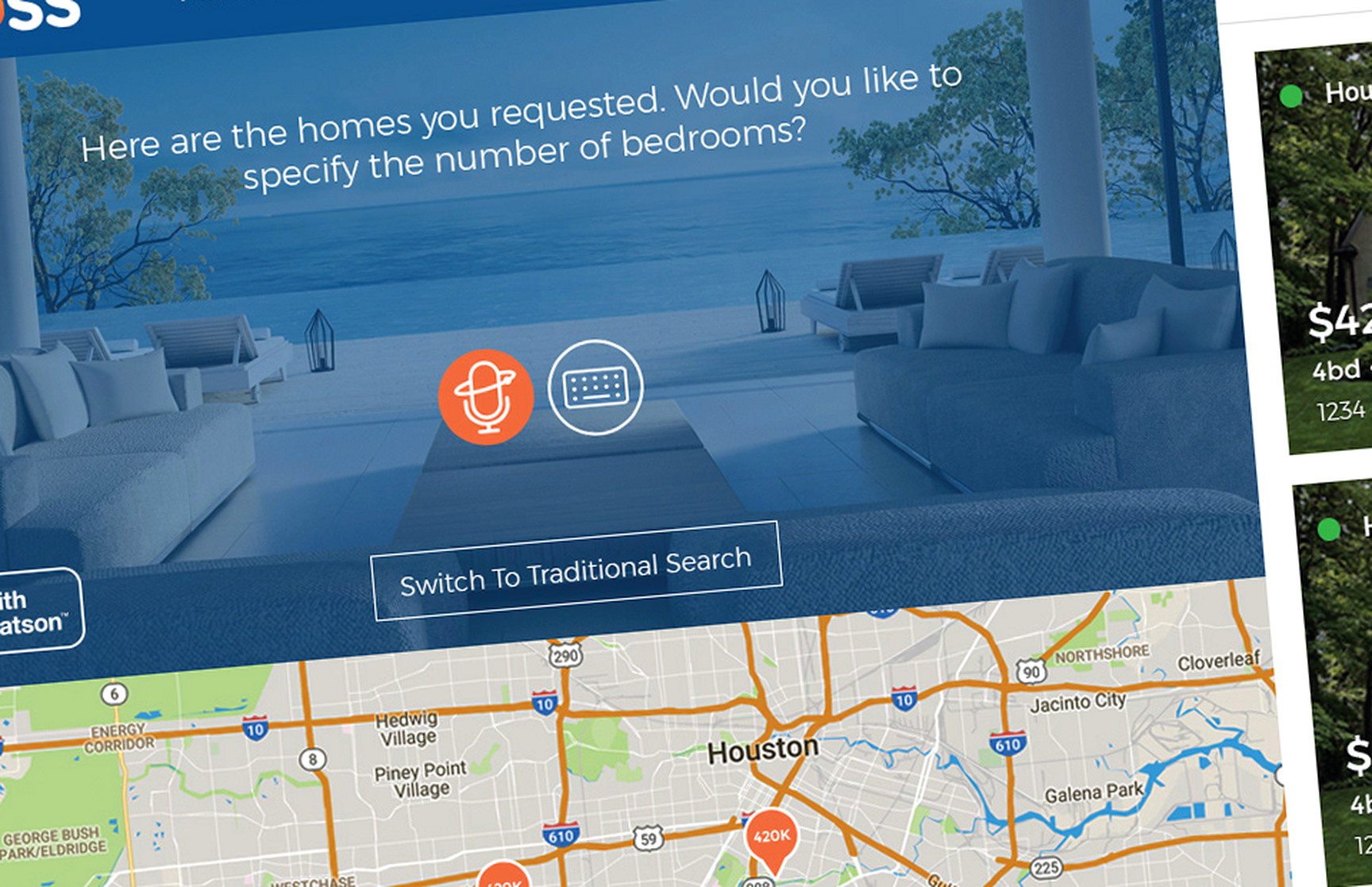
Ask DOSS set out to transform real estate search by replacing clunky filters and forms with natural voice and text queries. As design lead, I took the platform from initial concept through a full production launch, creating a frictionless conversational experience that felt intuitive for buyers, sellers, and agents alike.
Challenge
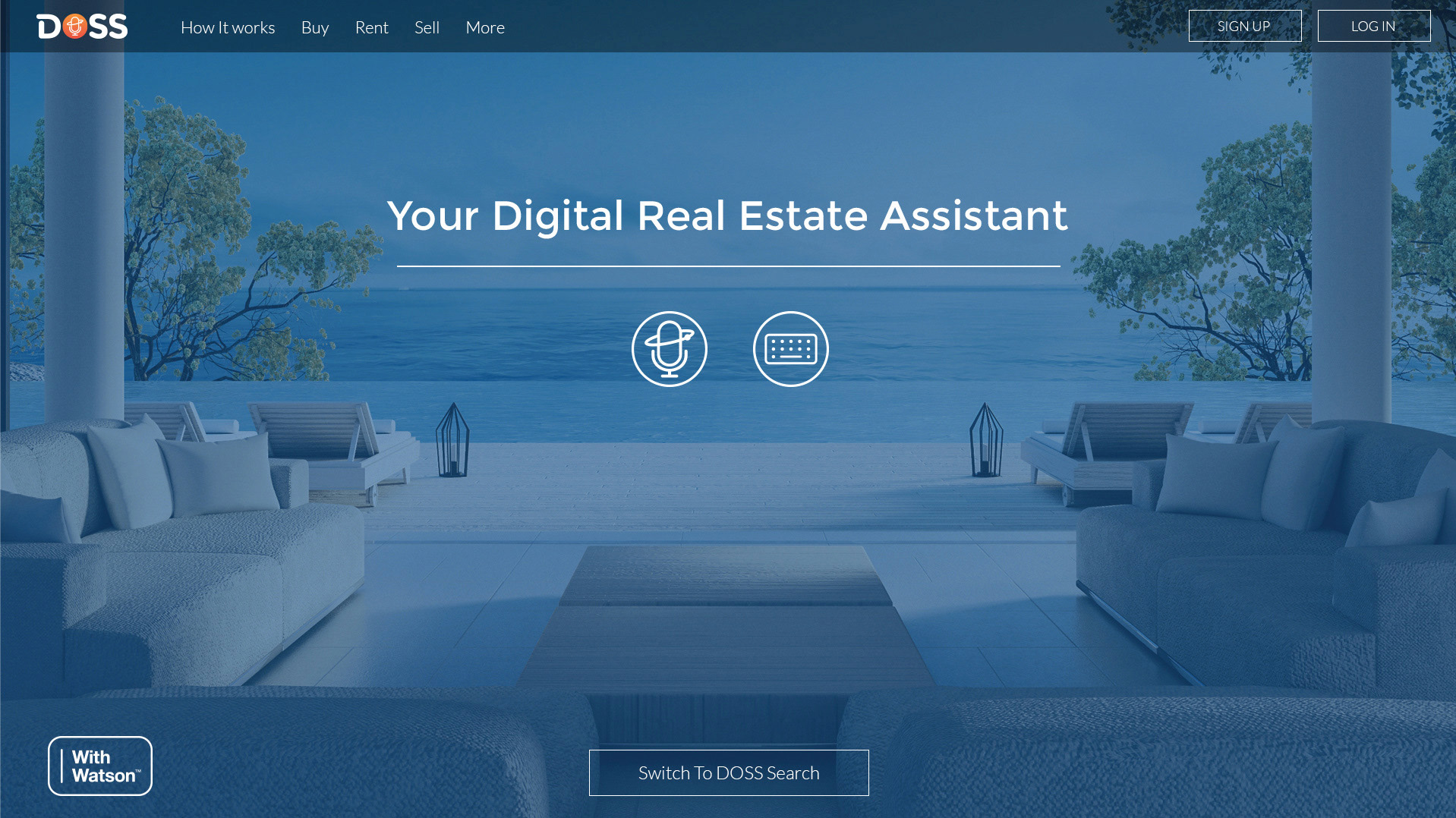
The real estate market is saturated with complex search tools that overwhelm users with filters, jargon, and rigid workflows. DOSS needed a scalable, intuitive solution that translated ambiguous human questions ("show me homes near good schools under $400K") into actionable results, while blending three distinct interaction models, voice, natural language, and traditional filter-style search, into a single seamless interface.
I joined the team as it was pushing hard toward an MVP to present to investors, with an aggressive timeline, high expectations, and no design work yet in place. There was no existing design foundation, no defined user flows, and no brand direction; I was stepping into a blank slate.
Process & Solution
Foundation. With no existing design work in place, I started by grounding the product in research: a competitive analysis of surveys, user reviews, and user flows from leading real estate platforms and voice-based assistant tools, paired with user personas and customer journey mapping. From there, I drafted a feature list to guide MVP scoping, making sure both buyer and seller needs were accounted for from the start.
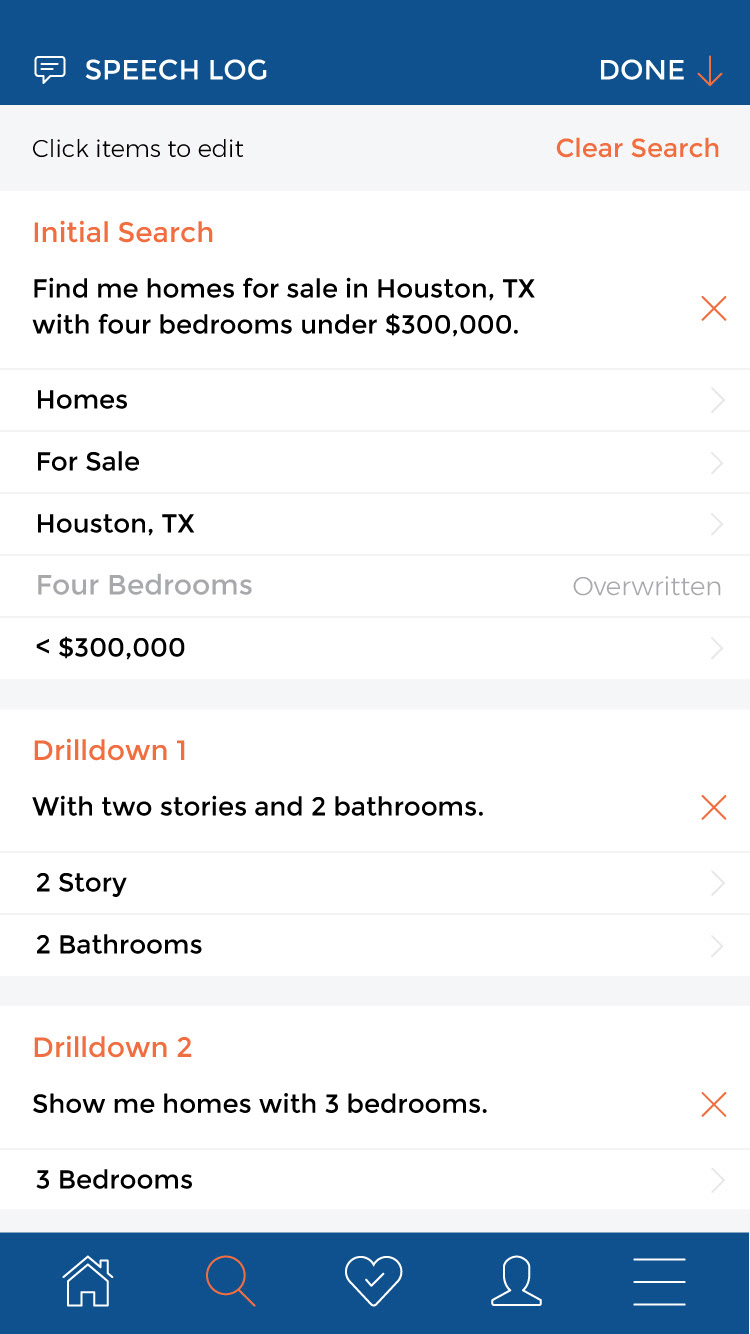
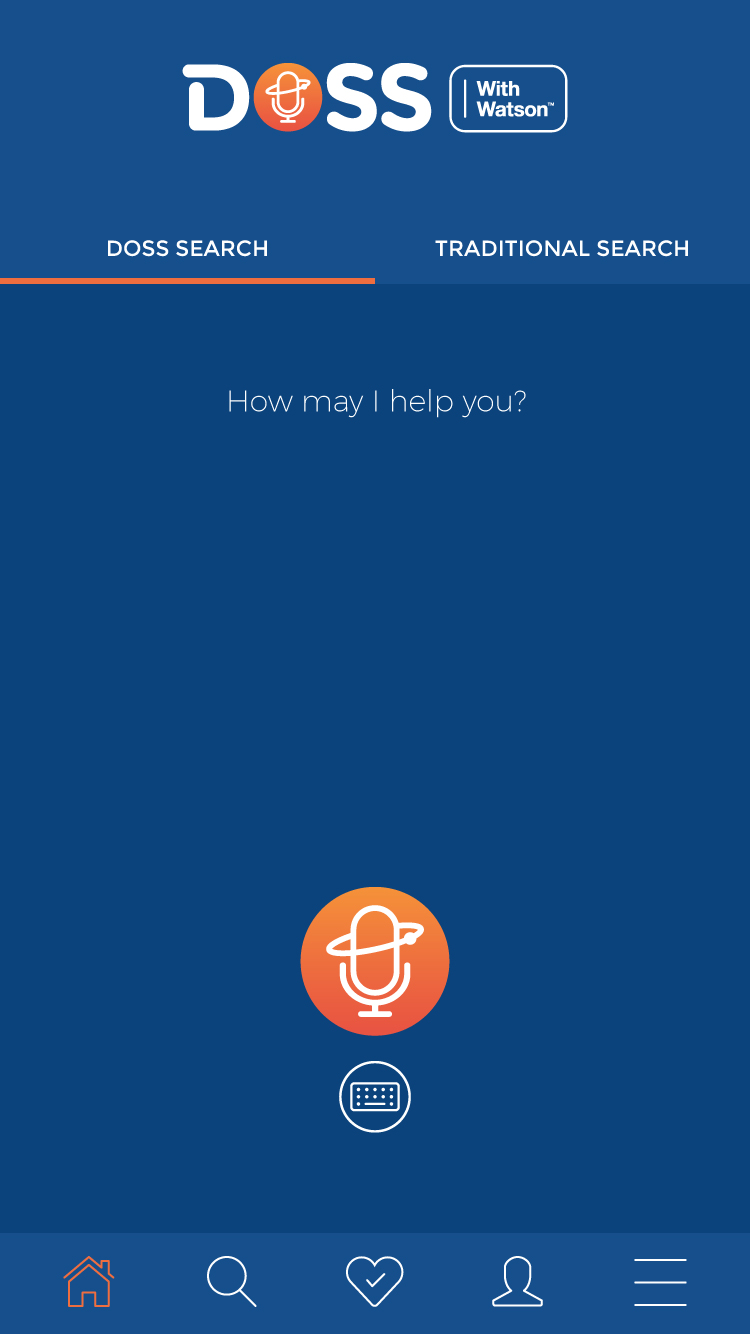
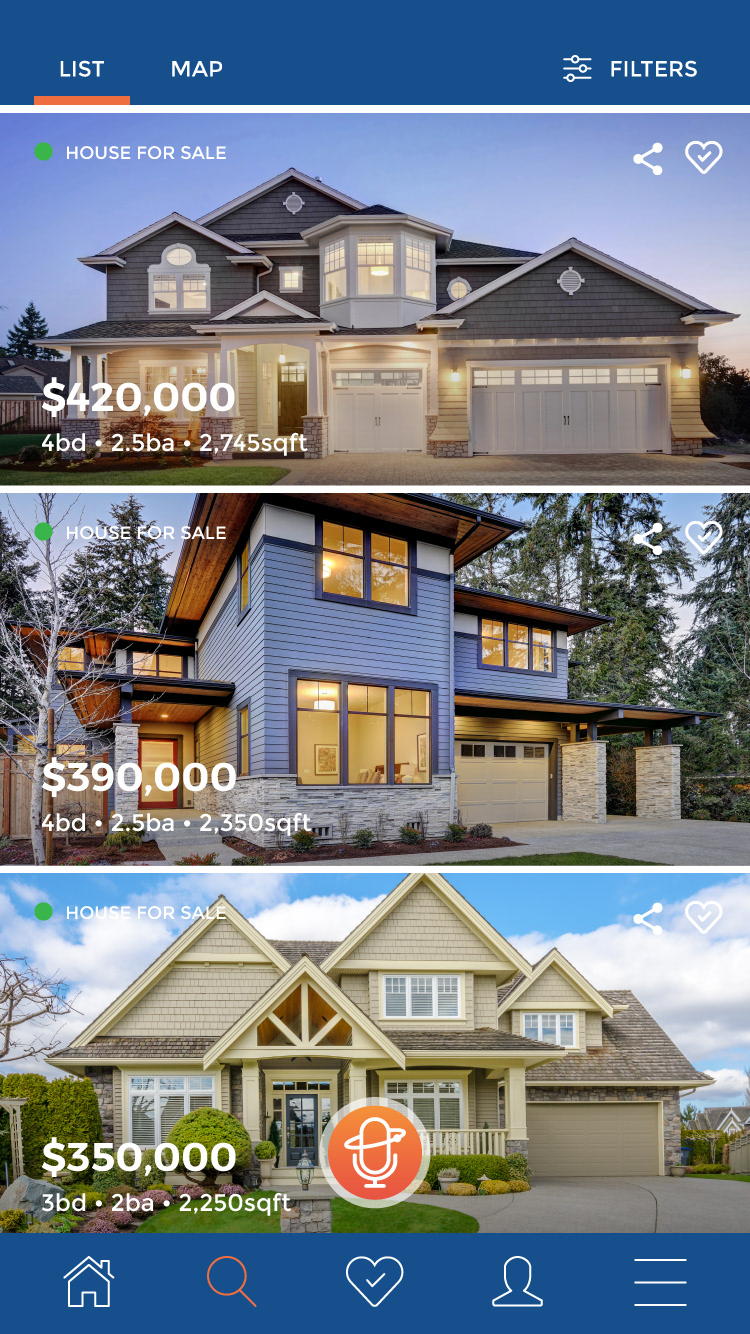
The interface. I led end-to-end design of a mobile and web platform connecting buyers, sellers, and agents through conversational search, sketching and wireframing the screen-level flows that shaped how users searched, browsed, and interacted with listings. The final experience centered on a natural chat-style interface that let users speak or type queries seamlessly, backed by a flexible design system covering voice recognition states, fallback handling, and smart suggestions. Early brand guidelines and a content strategy tied the interface together and gave the emerging DOSS platform a consistent identity. Frequent usability testing and analytics reviews shaped which features earned their place and which didn't, and the platform ultimately shipped to production with that vision intact.
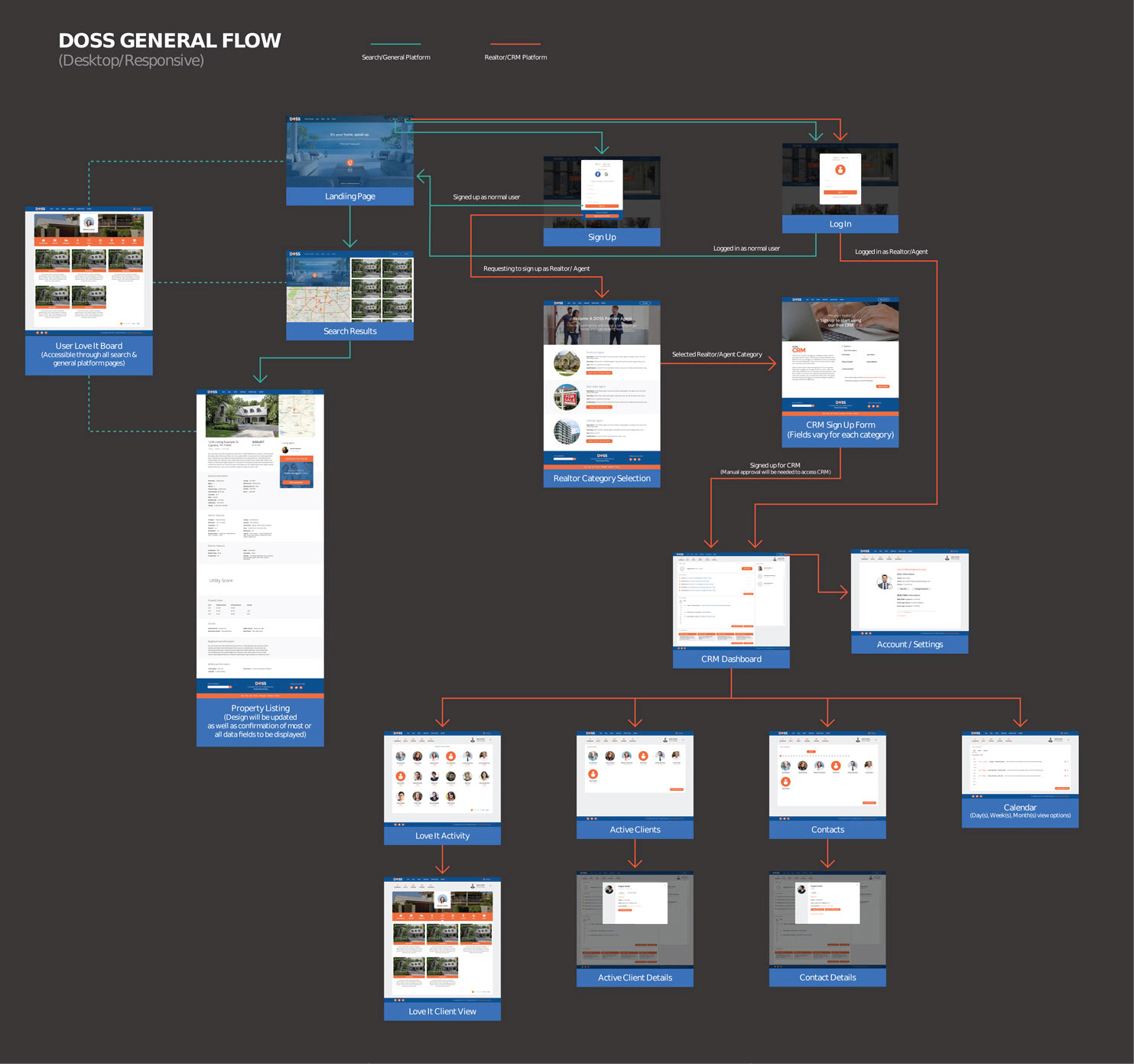
Keeping teams aligned. Because the project moved through multiple outsourced development teams over time, I built a high-level user flow supported by early page mockups to communicate the core functionality and user journey clearly. That artifact became the team's north star, letting me re-onboard new developers quickly and keep continuity across every handoff without losing momentum.
Impact
- Secured investor funding on the strength of early, validated prototypes, then carried the design through to a full production launch
- Onboarded 500+ users on the live platform through an intuitive, mobile-first design
- Shortened development cycles by keeping distributed teams aligned, accelerating delivery from concept to launch
Deliverables
- Competitive analysis and MVP feature scoping for the consumer search experience
- User personas, customer journey maps, and early brand guidelines
- End-to-end conversational flow designs, carried from early prototypes through production
- A scalable design system covering voice, chat, and error/fallback interactions
- Interaction guidelines for natural language queries, multi-step results, and user onboarding
- High-level user flow and mockups used to onboard distributed development teams
Selected Work
drag to explore